





Get a Cardiac CT Calcium Score at CCM Health: A Simple Test That Can Help Reveal Your Heart Disease Risk
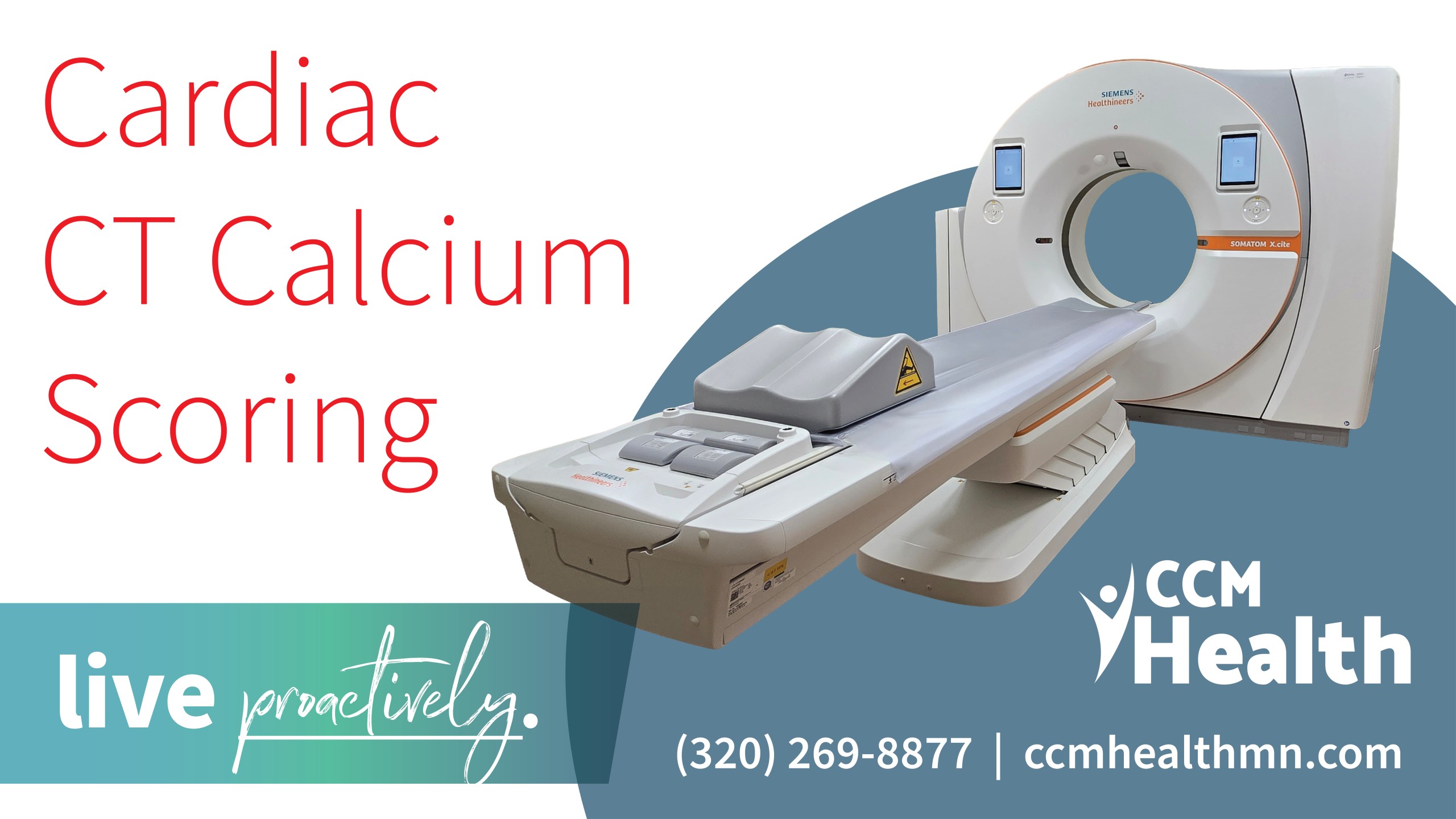
Get a Cardiac CT Calcium Score at CCM Health: A Simple Test That Can Help Reveal Your Heart Disease Risk
Heart disease can develop quietly. You may feel healthy and have no symptoms while plaque is slowly building inside the arteries that supply blood to your heart. CCM Health now offers Cardiac CT Calcium Score testing, a quick, noninvasive test that can help identify signs of coronary artery disease before symptoms develop. The test measures calcium buildup in the coronary arteries and gives you and your healthcare provider another tool for understanding your risk of heart disease.
What Is a Cardiac Calcium Score?
A cardiac calcium score, also called a coronary artery calcium (CAC) score, uses a CT scan to look for calcium deposits in the arteries of your heart.
Calcium can be a sign that plaque has built up in the artery walls. Plaque buildup is known as atherosclerosis, or coronary artery disease. Over time, coronary artery disease can increase your risk of a heart attack and other cardiovascular problems.
The scan does not require needles, IVs, contrast dye, or medication. It is designed as a risk-assessment tool for people who do not currently have symptoms of heart disease.
Why Is the Test Helpful?
Traditional heart health screenings often look at risk factors such as cholesterol, blood pressure, family history, tobacco use, diabetes, weight, and physical activity.
A cardiac calcium score provides different information. It allows your healthcare provider to see whether calcified plaque is already present in your coronary arteries.
Knowing your score can help you and your provider have a more informed conversation about your heart health. Your results may help guide decisions about lifestyle changes, cholesterol management, medications, or additional testing.
“This is an easy test that can provide both peace of mind and helpful information about your heart health,” says Jon Jerve, CCM Health Imaging Department Manager. “Knowing your calcium score gives you and your primary care provider another piece of information to better understand your heart disease risk and determine what steps, if any, may be helpful moving forward.”
Who May Benefit From a Cardiac Calcium Score?
A calcium score may be helpful for adults who do not have heart-related symptoms but have risk factors for cardiovascular disease.
Risk factors may include:
- A family history of heart disease
- High cholesterol
- High blood pressure
- Diabetes or prediabetes
- Current or previous tobacco use
- Being overweight or having obesity
- An inactive lifestyle
- Other cardiovascular risk factors
The test is not appropriate for everyone. Your healthcare provider can help determine whether cardiac calcium scoring would provide useful information based on your age, health history, and overall cardiovascular risk.
What Happens During the Scan?
The calcium score test is simple and usually takes only a few minutes.
You will lie on a table that moves into a CT scanner. During the scan, you may be asked to hold your breath for several short periods while images of your heart are taken.
There is no IV or contrast dye. The scan does involve a small amount of radiation.
Understanding Your Results
After your scan, a computer calculates a calcium score based on the amount of calcium found in your coronary arteries.
A score of zero means no calcified plaque was detected. A score above zero means some calcified plaque is present. In general, the higher the score, the greater the amount of coronary artery disease that may be present.
Your calcium score should not be considered on its own. Your healthcare provider will review the result along with other factors such as your cholesterol, blood pressure, family history, tobacco use, diabetes, and overall health.
It is also important to understand that the test does not detect all types of plaque. A low or zero calcium score does not guarantee that you will never experience a heart attack or other heart problem.
A Screening Test — Not an Emergency Test
Cardiac calcium scoring is intended for people who are not experiencing symptoms.
If you are having symptoms such as chest pain, shortness of breath, or other possible signs of a heart problem, a calcium score is not the appropriate test. You may need more immediate and detailed medical evaluation.
If you believe you are experiencing a medical emergency, seek emergency medical care right away.
How to Schedule a Cardiac CT Calcium Score at CCM Health
A Cardiac CT Calcium Score must be ordered by your primary care provider. Your provider can review your personal risk factors and help determine whether the test is appropriate for you.
The Cardiac CT Calcium Score is a cash-based service and costs $100 at CCM Health. Because it is offered as a cash-based screening service, patients should plan to pay the cost of the test rather than have it billed through insurance.
If you are interested in cardiac calcium scoring, start by talking with your primary care provider. Together, you can review your heart disease risk and decide whether a calcium score could provide helpful information about your heart health.
Taking steps to understand your risk today can help you and your healthcare team make informed decisions to protect your heart for the future. Contact your primary care provider today to request a Cardiac CT Calcium Score test at CCM Health.